
The instinct to pause all protective care when skin feels raw and reactive seems logical—until you consider what unprotected UV exposure does to already disrupted lipid barriers. Dermatological evidence increasingly demonstrates that compromised stratum corneum structures amplify photosensitivity rather than tolerate it, creating a paradox where the very moment your skin barrier weakens is precisely when photoprotection becomes non-negotiable. This survey published on behalf of the BAD reveals that only 10% of UK dermatology clinicians meet recommended reapplication guidelines, suggesting even specialists struggle with translating SPF theory into consistent daily practice. For individuals managing barrier dysfunction—whether from eczema flares, post-procedure sensitivity, or chronic irritation—the stakes extend beyond sunburn prevention to encompass inflammatory cascade interruption and hyperpigmentation risk mitigation.
Barrier compromise manifests through multiple pathways—detergent overexposure from excessive handwashing, genetic lipid synthesis deficiencies in atopic dermatitis, or acute trauma from chemical peels and laser procedures. Regardless of origin, the functional consequence remains identical: elevated transepidermal water loss, reduced corneocyte cohesion, and critically, diminished capacity to filter environmental aggressors including ultraviolet radiation.
The clinical question then shifts from whether to protect compromised skin to how to protect it without triggering additional sensitisation. Standard sunscreen formulations designed for intact barriers often contain penetration enhancers, fragrance compounds, or chemical filters that, whilst effective photoprotectors, can provoke contact dermatitis when the stratum corneum’s defensive architecture is already breached.
Your barrier-SPF essentials decoded in under a minute:
- Fragile barriers amplify UV penetration through weakened lipid matrices—daily SPF 50 prevents inflammation amplification during the recovery window
- Choose formulas combining ceramides and panthenol B5 for simultaneous barrier lipid support and broad-spectrum photoprotection
- Apply via gentle pressing (never rubbing) over moisturiser; reapply every 2 hours during continuous outdoor exposure
- Visible improvement typically emerges within several weeks of consistent use, with full stratum corneum restoration requiring extended consistent protocols
- Consult a dermatologist for persistent dysfunction or when layering SPF with prescription barrier treatments
Why fragile barriers amplify UV vulnerability
The stratum corneum operates as a thin protective structure (typically 15-20 micrometres), where corneocytes (bricks) embed within intercellular lipid lamellae (mortar) composed primarily of ceramides, cholesterol, and free fatty acids. When this architecture deteriorates—whether through surfactant assault, inflammatory cytokine disruption, or filaggrin mutation—the resulting lipid depletion creates microscopic channels permitting enhanced UV penetration to viable epidermal layers beneath. Understanding the temps de réparation de la barrière cutanée clarifies why immediate photoprotection cannot wait for complete structural restoration.
TEWL measurements documented in Frontiers in Medicine confirm that systematic barrier disruption significantly increases transepidermal water loss whilst simultaneously reducing the skin’s intrinsic UV-filtering capacity. Repeated exposure to surfactants and high-concentration ethanol disrupts the lipid barrier of the stratum corneum, leading to protein denaturation and keratinocyte membrane changes. This weakens the skin barrier, causing increased TEWL, greater irritant and allergen penetration, and elevated risk of skin lesions and inflammation—all whilst UV radiation penetrates more deeply through the compromised architecture.
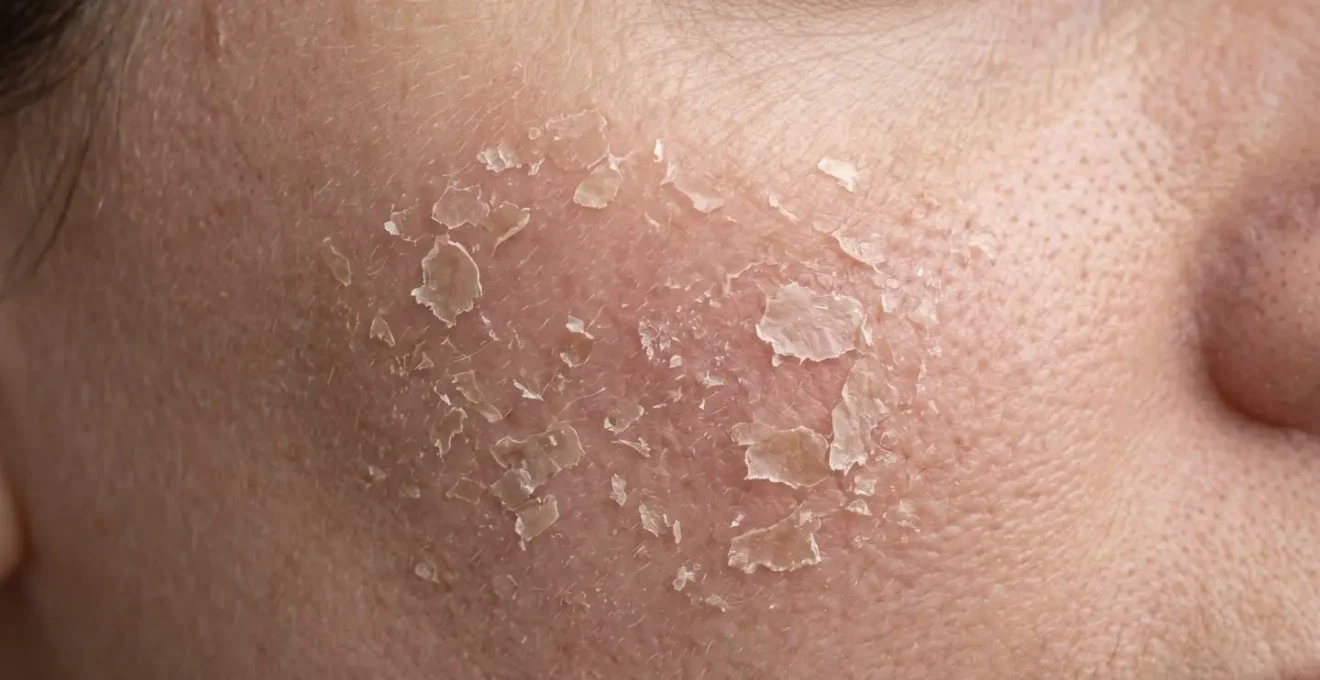
Biochemical analysis reveals that UV exposure on already-compromised skin disrupts enzymatic pathways essential for barrier lipid maturation. Enzymatic data published in the International Journal of Cosmetic Science establish that reduced levels of key processing enzymes (12R-LOX, eLOX3, SDR9C7 and TG1) were observed in photodamaged skin, associated with reduced stratum corneum maturation and increased corneocyte envelope fragility. This creates a vicious cycle: barrier dysfunction increases UV penetration, which further impairs the enzymatic machinery needed for barrier repair, perpetuating the compromise.
The most widespread misconception about barrier care and UV protection requires immediate correction:
Myth: “My skin is too sensitised for SPF—I’ll wait until it heals before applying protection.”
Evidence-based reality: Barrier dysfunction amplifies UV vulnerability precisely when protection is most critical. Unprotected UV exposure on compromised skin triggers inflammatory mediators (IL-1α, TNF-α) that actively degrade the lipid matrix you’re attempting to restore, extending recovery timelines by weeks. Barrier-adapted SPF formulations with ceramides and panthenol simultaneously protect and repair, accelerating rather than delaying recovery. The key lies in formula selection—mineral filters with barrier-supportive actives rather than chemical filters with penetration enhancers.
Consider an individual managing eczema-prone skin during winter months. Central heating reduces indoor humidity whilst outdoor cold triggers barrier lipid crystallisation. Their daily 20-minute commute to work, even through overcast urban environments, exposes already-compromised facial skin to cumulative UVA radiation that standard indoor environments don’t block.
Initial attempts with conventional mineral SPF 50 worsened the situation—the thick zinc oxide formula left a pronounced white cast on their Fitzpatrick type IV skin and created occlusive patches over the most irritated zones around the nose and cheeks, where barrier dysfunction was most acute. Discontinued use meant three weeks of unprotected UV exposure, compounding inflammation visible as persistent erythema.
Switching to a barrier-repair SPF 50 formula containing 5% panthenol B5 and ceramide complex, applied via pressing technique over a lightweight occlusive moisturiser, eliminated the white cast issue whilst delivering both photoprotection and active barrier support. Within 3-4 weeks, transepidermal water loss measurements normalised, visible flaking resolved, and tolerance to niacinamide serums previously too irritating was restored—demonstrating how SPF selection tailored to barrier status accelerates rather than delays recovery.
Selecting barrier-compatible SPF 50 formulations
Not all SPF 50 products suit compromised barriers. The distinction lies not merely in sun protection factor ratings but in the vehicle formulation, filter type, and inclusion of barrier-supportive actives. Three criteria guide selection for sensitised skin: filter system tolerance, lipid-replenishing actives, and minimal penetration enhancer content.
Mineral filters (zinc oxide, titanium dioxide) generally offer superior tolerance on compromised skin compared to chemical filters (avobenzone, octinoxate) because they remain on the stratum corneum surface rather than requiring epidermal penetration for efficacy. However, mineral formulas historically posed cosmetic acceptability challenges—pronounced white cast and pastiness. Modern formulations address this through micronised particles and tinted bases that blend across diverse skin tones whilst maintaining the gentle, surface-acting protection compromised barriers require.
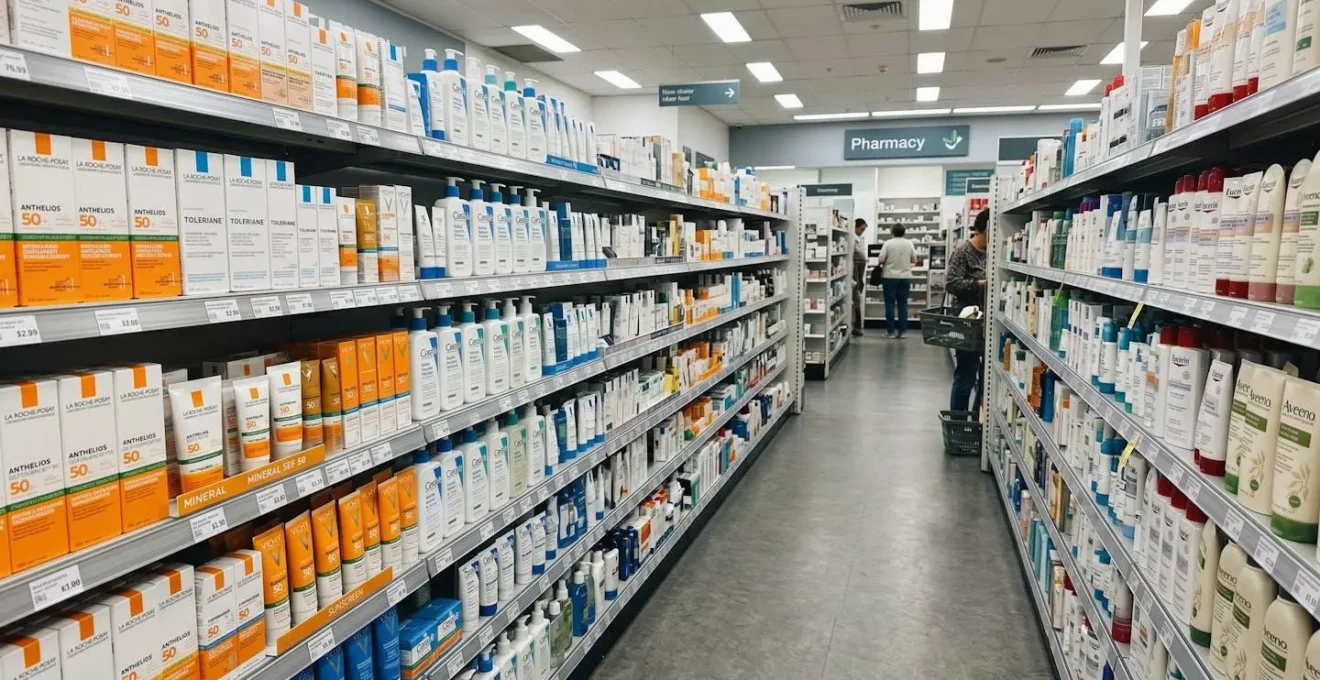
Formulations like the Cicaplast Balm B5 SPF 50 – LA ROCHE POSAY exemplify the barrier-repair SPF category, combining mineral broad-spectrum filters with 5% panthenol (provitamin B5) for humectant and anti-inflammatory effects, plus madecassoside for soothing compromised tissue. The inclusion of barrier-identical lipids—ceramides mimicking the skin’s natural lamellar structure—supports lipid matrix reorganisation during the vulnerable recovery phase.
SPF 50 delivers approximately 98% UVB blockage (FDA/AAD guidelines) compared to SPF 30’s 93%, a meaningful difference when barrier dysfunction already compromises your intrinsic photoprotective capacity. The incremental protection becomes non-negotiable when inflammatory amplification from breakthrough UV exposure can extend barrier recovery timelines by weeks.
Application technique for maximum barrier respect
Even the most barrier-compatible formula fails if application technique introduces mechanical irritation. Compromised skin demands modification of standard SPF application protocols to prioritise gentleness alongside coverage.
Barrier-respectful SPF application protocol:
- Cleanse with lukewarm water and barrier-gentle cleanser (avoid hot water which further disrupts lipid lamellae)
- Apply barrier-repair moisturiser first; allow 2-3 minutes for initial absorption before SPF layering
- Dispense SPF 50 onto fingertips; dot across forehead, cheeks, nose, chin rather than spreading in a single motion
- Press gently into skin using patting motions—never rub, which creates shear forces disrupting fragile lipid reorganisation
- Extend application to often-missed high-UV-exposure zones: ears, hairline, neck
- Reapply every 2 hours during continuous outdoor exposure; indoor work environments may extend to midday reapplication
Application quantity adherence represents the most common failure point in real-world SPF use. The 2 mg/cm² standard (European Commission SPF testing protocol) used in laboratory testing translates to approximately one-quarter teaspoon for the face alone—substantially more than most users intuitively apply. When applied at half the tested quantity, SPF 50 effectively performs closer to SPF 15-20, creating a false security gap where users believe they’re protected at the labelled level whilst actually experiencing breakthrough UV exposure that directly undermines barrier lipid synthesis during the critical recovery window. Most users significantly underestimate application quantity based on dermatological compliance studies, perpetuating suboptimal photoprotection precisely when barrier dysfunction demands maximum defence. Measuring the correct amount using the two-finger rule (a line of product along the index and middle fingers) ensures laboratory-equivalent protection translates to real-world barrier defence.
One critical layering consideration demands medical supervision:
If you’re using prescription barrier treatments (topical corticosteroids, calcineurin inhibitors like tacrolimus or pimecrolimus), consult your dermatologist before introducing SPF layering. Certain active ingredients alter stratum corneum permeability in ways that may interact with sunscreen filters or vehicles. Your clinician can advise on optimal application sequencing and timing intervals to maximise both therapeutic efficacy and photoprotection without compromising either objective.
Your practical questions answered
Can I use SPF 50 on actively inflamed or weeping eczema patches?
On intact but compromised skin (dry, flaky, tight), barrier-adapted SPF 50 is appropriate and beneficial. However, on actively weeping, crusted, or open lesions, consult your dermatologist before applying any topical product including sunscreen. Significant UV radiation penetrates cloud cover, and compromised barriers offer reduced intrinsic photoprotection, making physical sun avoidance (wide-brimmed hats, UV-protective clothing, shade-seeking) your primary defence until epithelial integrity permits topical application. Your clinician may recommend wound-appropriate barrier dressings that incorporate UV protection for severe cases.
Should I choose SPF 50 or SPF 30 for compromised barriers?
SPF 50 delivers measurably superior protection (approximately 98% UVB blockage versus SPF 30’s 93%) that becomes clinically meaningful when your barrier dysfunction already reduces intrinsic photodefence capacity. The incremental protection helps prevent inflammatory amplification from breakthrough UV exposure that can extend barrier recovery timelines. However, formula vehicle matters more than SPF number alone—a barrier-compatible SPF 30 with ceramides outperforms an irritating SPF 50 with fragrance and alcohol. Prioritise both: seek SPF 50 formulations explicitly designed for sensitive or compromised skin.
How quickly will I see barrier improvement with consistent SPF use?
Mild to moderate barrier dysfunction typically shows measurable reduction in symptoms within several weeks of consistent SPF use combined with barrier-repair actives. Full lipid matrix restoration timelines vary individually and may extend across multiple weeks. Severe barrier disruption requires dermatologist-supervised protocols with extended timelines. Visible improvements—reduced flaking, decreased tightness, improved tolerance to previously irritating products—often emerge before complete barrier restoration. Consistent daily application remains essential throughout recovery; premature discontinuation reintroduces UV-driven inflammation that reverses progress.
Can I layer vitamin C or retinoids under barrier-repair SPF?
Active layering during acute barrier compromise requires caution. Vitamin C (L-ascorbic acid) and retinoids (retinol, tretinoin) are potent actives that can provoke irritation when barrier function is already impaired. During active barrier recovery phases, prioritise gentle barrier-supportive ingredients (ceramides, panthenol, niacinamide at low concentrations) beneath your SPF. Once barrier function stabilises—typically several weeks into consistent SPF and moisturiser use—you can gradually reintroduce actives under dermatologist guidance, always maintaining vigilant SPF protection since retinoids increase photosensitivity. Morning vitamin C under SPF offers antioxidant photoprotection synergy, but start with low concentrations and monitor for irritation signs.
What if my barrier-repair SPF causes stinging on application?
Transient mild tingling lasting under 30 seconds may occur with certain actives (niacinamide, some peptides) even in barrier-compatible formulas. However, persistent stinging, burning, or worsening erythema signals formula intolerance requiring immediate discontinuation. Check the ingredient list for common sensitisers even in “sensitive skin” products: fragrance (including essential oils), denatured alcohol high on the ingredient list, or chemical filters like avobenzone if you have known sensitivities. Switch to a simpler mineral-only formula with minimal ingredient count. If all SPF formulations trigger reactions, consult a dermatologist—you may require patch testing to identify specific allergens or a compounded prescription barrier-SPF formulation.